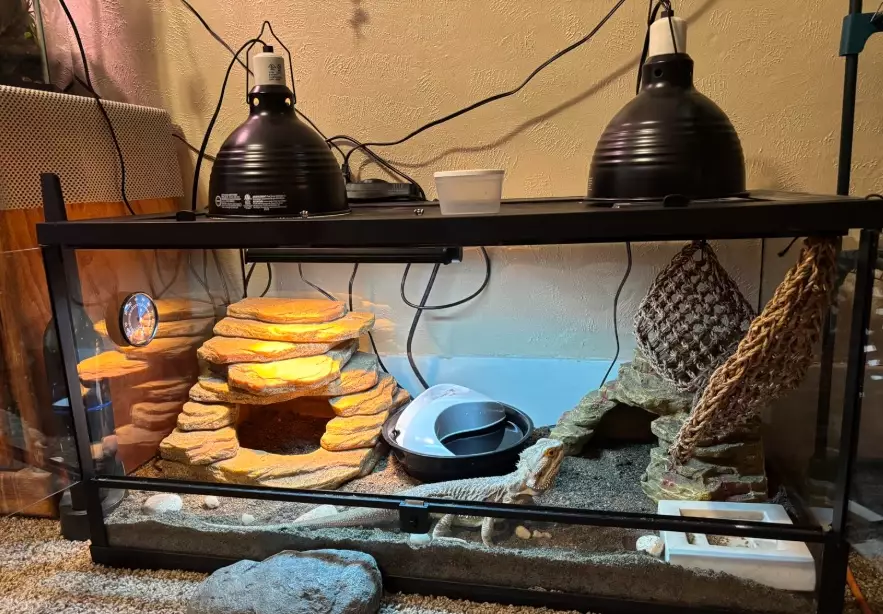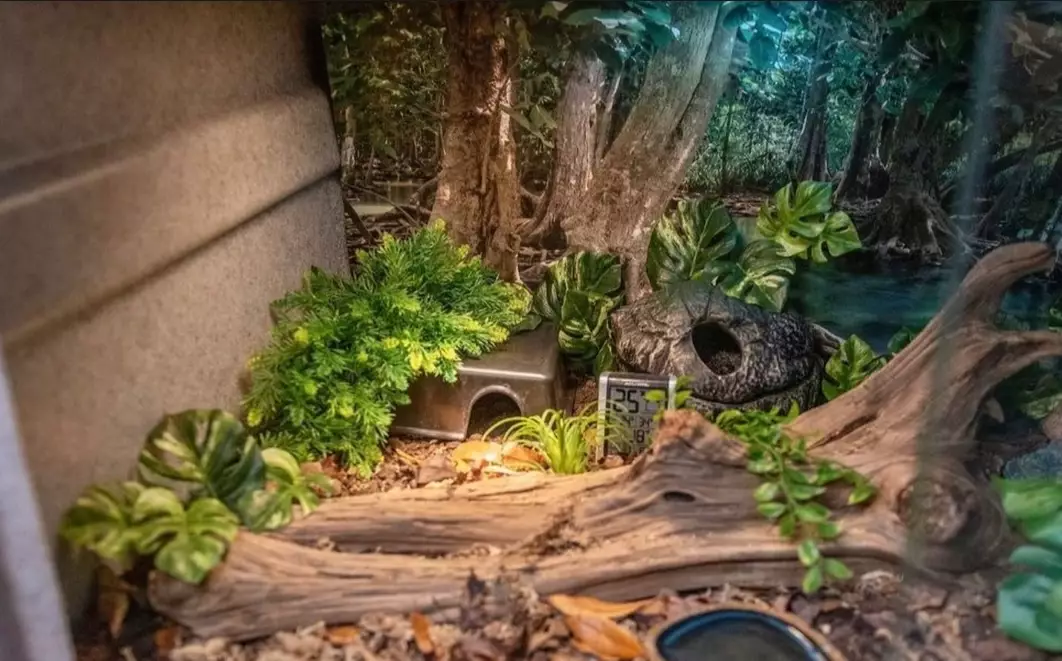
Most people plug a thermostat into a heat mat, tape the probe to the mat surface, and call it done. I did exactly that for my first bearded dragon ten years ago. The thermostat read a steady 38°C while the basking spot above the slate rock hit 46°C. My dragon stopped eating for five days. That gap between reading and reality is the entire reptile thermostat setup problem, and almost nobody explains it before the animal gets hurt.
What's Inside (Skip to the Fix)
Wiring Order: Thermostat vs. Heat Mat vs. Light
Plug the heat source into the thermostat first. The thermostat plugs into the wall. That sequence is not negotiable. Sounds obvious, yet I have seen four different keepers plug a heat mat straight into a timer, then wire the thermostat to the UVB bulb. The result: uncontrolled belly heat running all night, and a light that flickers on and off every ninety seconds.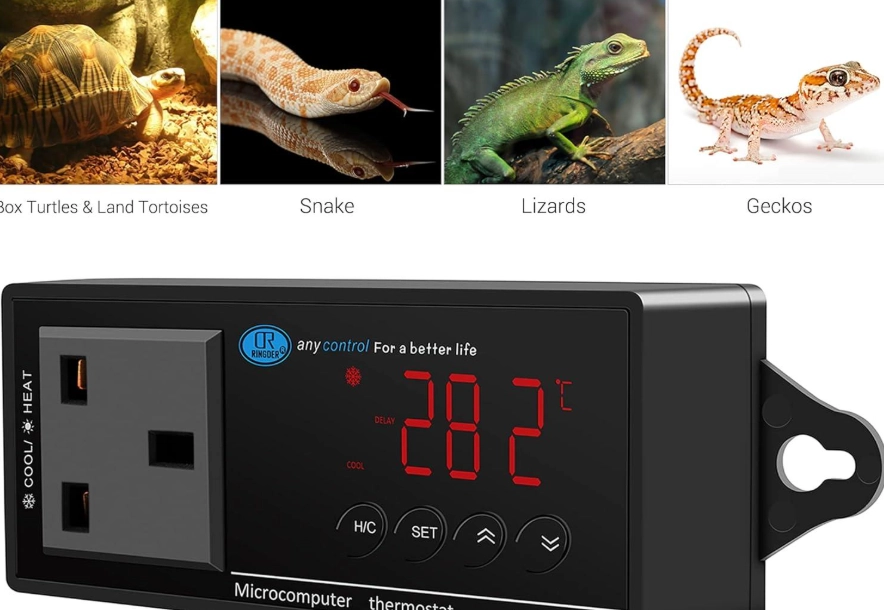
A thermostat controls one thing at a time. Heat mat? Mat plugs into thermostat. Ceramic heat emitter (CHE) for ambient heat? CHE plugs into a separate thermostat or a dual-zone unit. Basking bulb? If you live in a cold room, that bulb might need its own dimming thermostat too, especially with high-wattage halogens that can push a 40-gallon tank past 40°C in under an hour.
The exception is UVB. Never, ever put a UVB fluorescent or mercury vapor bulb on a thermostat. Cycling UVB on and off wrecks the output spectrum and confuses the animal's circadian rhythm. UVB stays on a simple timer, 10-12 hours a day.
Field trick from a rescue vet I work with: Use a cheap plug-in energy monitor (the kind you'd use for a fridge) on the thermostat's wall output. If the wattage draw spikes and drops wildly, your thermostat is cycling too hard. Proportional units should hold near-steady wattage once the enclosure reaches target temperature.
On/Off vs. Proportional: Which One Actually Fits Your Setup
On/off thermostats click on at full power when the temp drops below the set point and shut off completely when it rises above. Proportional thermostats constantly throttle the power, dimming it up and down to hold a smooth temperature.
For a ceramic heat emitter or a radiant heat panel, on/off is fine. Those elements heat slowly and hold warmth, so a 1-2°C swing is harmless. For a heat mat under a plastic tub, on/off is trouble. The mat surface spikes, the plastic absorbs that spike, and a 1°C air temperature swing becomes a 4°C surface swing right where the animal's belly rests.
I run a Habistat Dimming Thermostat on every heat mat in my rack now. It cost me £65 versus £30 for the on/off version, and it saved a corn snake's ventral scales from a burn after a faulty on/off unit stuck closed for six hours.
| Thermostat Type | Best For | Typical Swing | Price Range |
|---|---|---|---|
| On/Off | CHE, radiant panel, oil-filled radiator | 2-3°C | $30-45 |
| Proportional (Dimming) | Heat mats, heat tape, incubators | 0.5-1°C | $55-85 |
| Pulse Proportional | Heat cable, small heat tape runs | 0.5-1.5°C | $50-70 |
| Dual-Zone | Two heat sources in one enclosure | 0.5-1°C per zone | $90-140 |
How Do You Place the Thermostat Probe Correctly?
This is where 80% of setups fail. The probe must read the temperature at the point where the animal actually sits, not the temperature of the heat mat's plastic backing.
For a heat mat under a glass tank with a thin layer of substrate: hot-glue the probe directly to the glass, dead center of the mat's footprint, underneath the substrate. Hot glue is safe, removable with a little prying, and won't conduct heat like tape does. Tape is a nightmare. It insulates one side of the probe and creates a false low reading.
For a basking bulb: hang the probe at the exact height of the basking spot, shaded from direct light. Direct light on a black probe reads 3-5°C hotter than the surrounding air. I zip-tie the probe to a piece of driftwood just behind the basking rock, so the animal's body blocks the light, not the probe.
Non-consensus warning: Probe placement on the back wall of the enclosure is what most care sheets tell you. It gives you a room temperature, not a basking temperature. If your thermostat probe sits on the back wall, your animal can still burn its belly on a heat mat that you think is running at 32°C. It's probably running at 42°C.
Check probe wire routing. A snake will wrap around a loose wire and yank the probe off the glass. Silicone the wire flat against the glass corner (aquarium-safe silicone only, let it cure 48 hours) so the snake can't get a grip on it. I learned that one after my royal python pulled a probe into the water bowl and the thermostat registered 22°C while the mat climbed to 48°C.
Species-Specific Thermostat Settings (What to Dial In)
These are my working numbers after keeping and rescuing these species, not generic care-sheet copy. Adjust for your room temperature, which shifts everything by 2-4°C seasonally.
| Species | Heat Mat Set Point | Basking Spot Target | Night Drop |
|---|---|---|---|
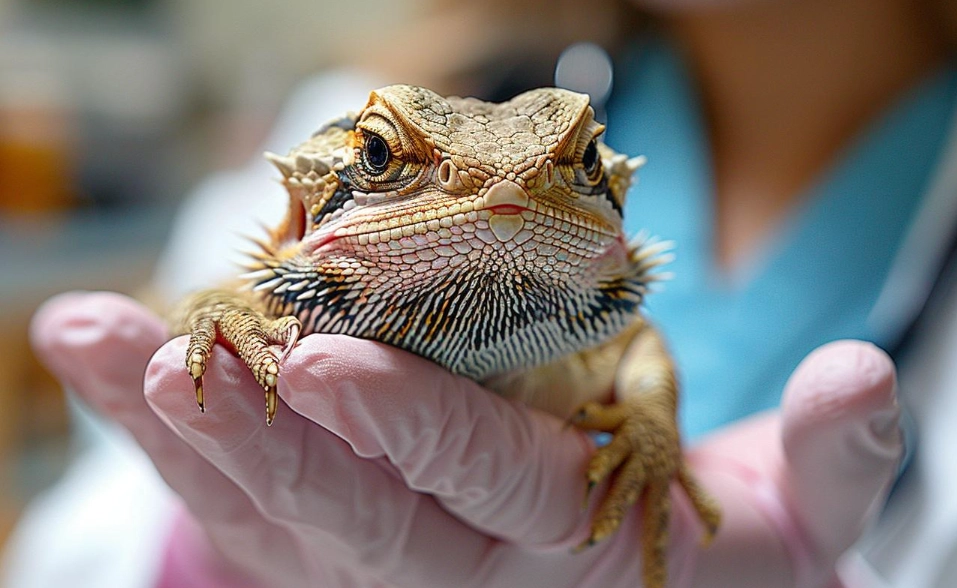
| Bearded Dragon | 36-38°C (mat under slate tile) | 40-42°C (halogen bulb) | 18-21°C |
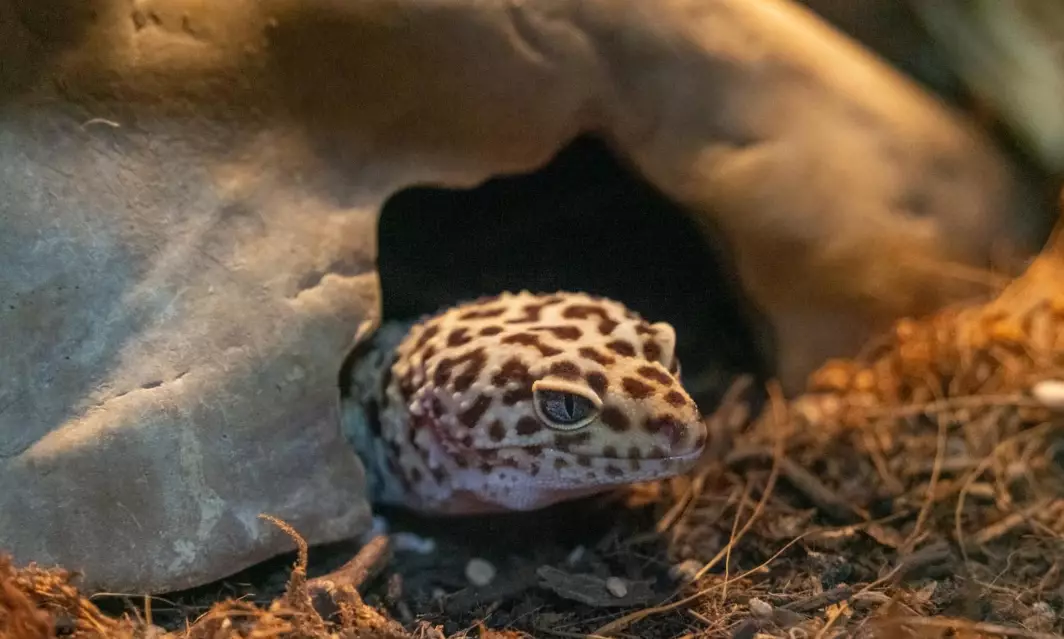
| Leopard Gecko | 31-33°C (mat under thin substrate) | 32-34°C (mat creates warm hide) | 20-22°C |
| Corn Snake | 29-31°C (heat tape one-third under tank) | 30-32°C (warm hide floor) | 21-24°C |
| Crested Gecko | No heat mat (ambient 22-25°C) | Room temp, no basking | 18-20°C |
| Ball Python | 31-33°C (heat tape under warm hide) | 32-34°C belly heat | 23-25°C |
Notice the crested gecko row. I see too many people slap a heat mat on a crested gecko tank because "it's a reptile." It's a room-temperature species from a cool island. A thermostat won't save an animal from a heat source it never needed. Match the thermostat to the species' actual thermal niche, not to a generic "reptile" section on a retail site.
Real setup example: My current leopard gecko rack uses a 25W heat tape strip running one-third under a 12-quart tub. The probe is hot-glued directly to the tub bottom, centered on the tape run, under the paper towel layer. A Habistat Dimming Thermostat holds the set point at 32°C. I check the probe against a temp gun (from Amazon, £18, the Etekcity model) every two weeks, because a single layer of paper towel shifting can create a 3°C variance between the probe reading and the surface the gecko actually touches.
Straight Answers on Thermostat Setup Failures
That ten-year-old bearded dragon tank I mentioned at the top? I moved the probe to the slate surface directly, set the thermostat to 38°C, and the basking spot settled at 41°C. My dragon started eating within two hours. The thermostat wasn't broken. It was just reading the wrong thing, which is the quiet trap in reptile thermostat setup that no product listing warns you about.
This guide reflects hands-on setup and troubleshooting across five species and more than a dozen thermostat models. All temperature ranges and product references were cross-checked against manufacturer documentation and my own temp-gun readings. Fact-checked by me, because a probe stuck to the wrong piece of glass is how you cook a lizard without ever seeing a warning light.