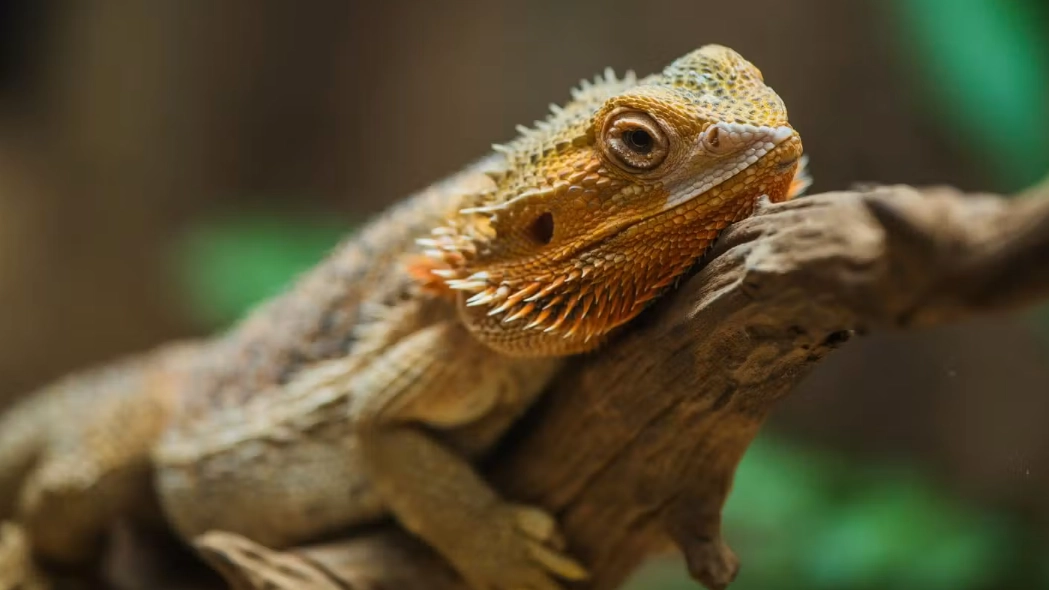
Every week someone messages me a screenshot of a pet store tank and asks, "this is fine for a baby bearded dragon, right?" It's almost never fine. I've kept and rehomed enough reptiles over the past decade to know that the biggest single mistake new keepers make isn't heating or diet — it's buying the enclosure first and the animal second. So here's the reptile enclosure size chart I wish someone had shown me when I started, along with the reasoning behind each number.
Quick Jump: What's Inside
The Core Size Chart (By Species)
These are minimum adult dimensions — length times width times height. Not "starter" sizes. If a chart tells you a 40-gallon breeder is fine for life, close the tab. It isn't.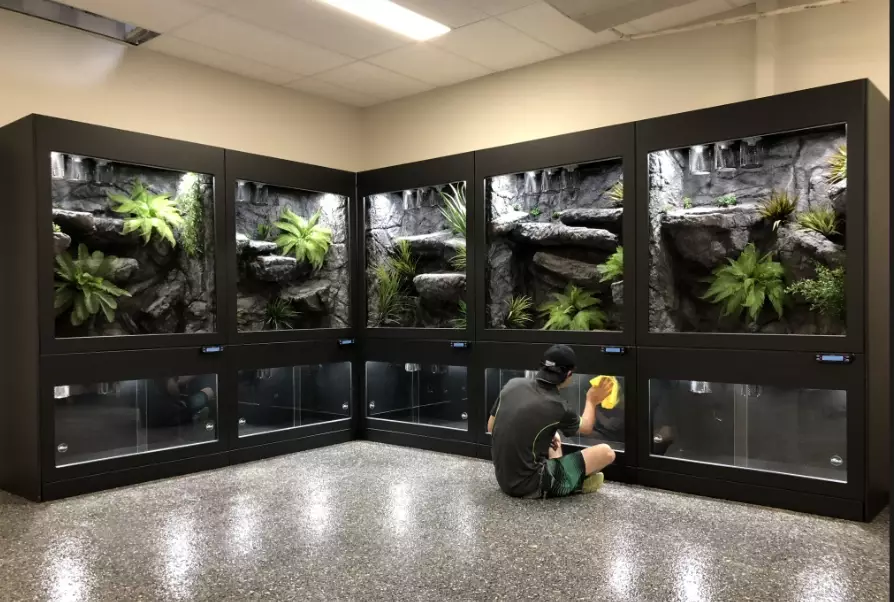
| Species | Min. Length | Min. Width | Min. Height | Real-World Note |
|---|---|---|---|---|
| Bearded dragon | 120 cm / 48 in | 60 cm / 24 in | 60 cm / 24 in | 4x2x2 ft is the floor, not the ceiling |
| Leopard gecko | 90 cm / 36 in | 45 cm / 18 in | 30 cm / 12 in | Floor space beats height for this species |
| Corn snake | 120 cm / 48 in | 60 cm / 24 in | 45 cm / 18 in | Adult length roughly equals tank length |
| Ball python | 120 cm / 48 in | 60 cm / 24 in | 45 cm / 18 in | Height helps with climbing and humidity gradients |
| Crested gecko | 45 cm / 18 in | 45 cm / 18 in | 60 cm / 24 in | Vertical orientation matters more than floor area |
| Blue tongue skink | 120 cm / 48 in | 60 cm / 24 in | 45 cm / 18 in | They use every inch of floor you give them |
| Russian tortoise | 180 cm / 72 in | 90 cm / 36 in | 45 cm / 18 in | Indoor tables beat glass tanks by a wide margin |
I keep the chart in the same mental folder as the husbandry guidance from the Reptiles Magazine care sheets and the species profiles published by the IUCN Red List — not because the Red List has enclosure sizes, but because knowing a species' natural home range tells you whether it's a climber or a floor-crawler, and that shapes the chart's height column.
How to Read an Enclosure Chart Without Getting Burned
Size charts aren't a shopping list. They're a sanity check. A 4x2x2 ft tank for a bearded dragon is a minimum, and I've seen dragons in 6-foot enclosures behave noticeably differently — more basking variation, less glass-surfing, calmer feeding response.
The single most important number on any chart is the width, not the length. A tank that's long but narrow turns into a one-way corridor. Your animal can't turn around without scraping its nose. I learned this the hard way with a rescue corn snake that had a permanent rub mark on its rostral scale from a 12-inch-wide tank.
Second rule: charts usually measure adult size. If you're buying for a juvenile, buy the adult tank now. Rebuying tanks is the most expensive way to keep a reptile.
The Baby Tank Trap Nobody Warns You About
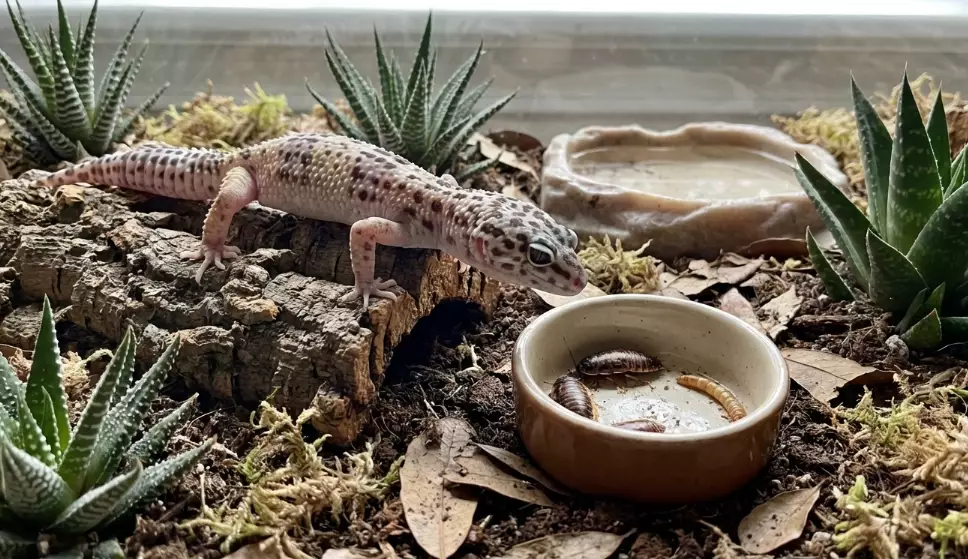
Here's a non-consensus take that ruffles some feathers: putting a hatchling in a giant adult enclosure is not automatically better. I've watched baby leopard geckos in 4-foot enclosures spend all their time hiding in one corner, skipping meals, and stressing. The trick isn't a smaller tank — it's a large tank with dense clutter and multiple hides close to the heat source.
So the chart still applies. You just modify the inside, not the outside. That's the part most "upgrade your tank" advice leaves out.
Three Measuring Mistakes I See Constantly
Charts are meaningless if you measure the wrong thing. These pop up in almost every enclosure photo I review.
- Measuring the tank, not the usable floor. A 40-gallon breeder is 36x18 inches externally — but thick substrate, a water bowl, and two hides eat 30% of that. Measure the open floor your animal can actually walk on.
- Counting height that's blocked. A tall tank with a deep substrate layer and a high basking shelf loses usable vertical space. For arboreal species like cresties, measure from substrate to the highest perch, not to the lid.
- Trusting the gallon number. Gallons are volume, and volume says nothing about dimensions. A 75-gallon tank and a 75-gallon tall tank have completely different footprints. Always check length x width x height.
How Do You Size an Enclosure Correctly, Step by Step?
Here's the process I run through every time I set up a new animal:
Step 1: Identify the species' adult size and lifestyle
Ground-dweller, climber, or burrower? That tells you which dimension to prioritize. Arboreal geckos want height. Tortoises want floor. Burrowers want deep substrate, which means more height than the chart suggests.
Step 2: Match the chart's length to the animal's adult body length
A rough rule for snakes: enclosure length should be at least the snake's adult length, and width at least half of that. For a 4-foot corn snake, that's 4x2 ft. This rule isn't perfect, but it's a fast sanity check.
Step 3: Add the equipment space
Heat lamp domes, UVB fixtures, water bowls, and hides all consume volume. If your chart number is 4x2x2, plan the interior layout before you buy. I sketch it on paper — it saves a return trip.
Step 4: Check the adult size, then buy once
Buy the adult enclosure. Use clutter to make it feel small. That's the whole game.
Questions Keepers Actually Ask Me
My bearded dragon is only 8 inches — can I skip the 4x2x2 for now?
You can, but you'll rebuy within a year. A 40-gallon breeder works as a grow-out for a few months if it's cluttered and the basking spot is dialed in. The catch is that juveniles grow fast and the upgrade cost stings more than buying the adult tank up front. If space is the constraint, a 4x2x2 with dense hides and a raised basking platform is the safer bet than a bare small tank.
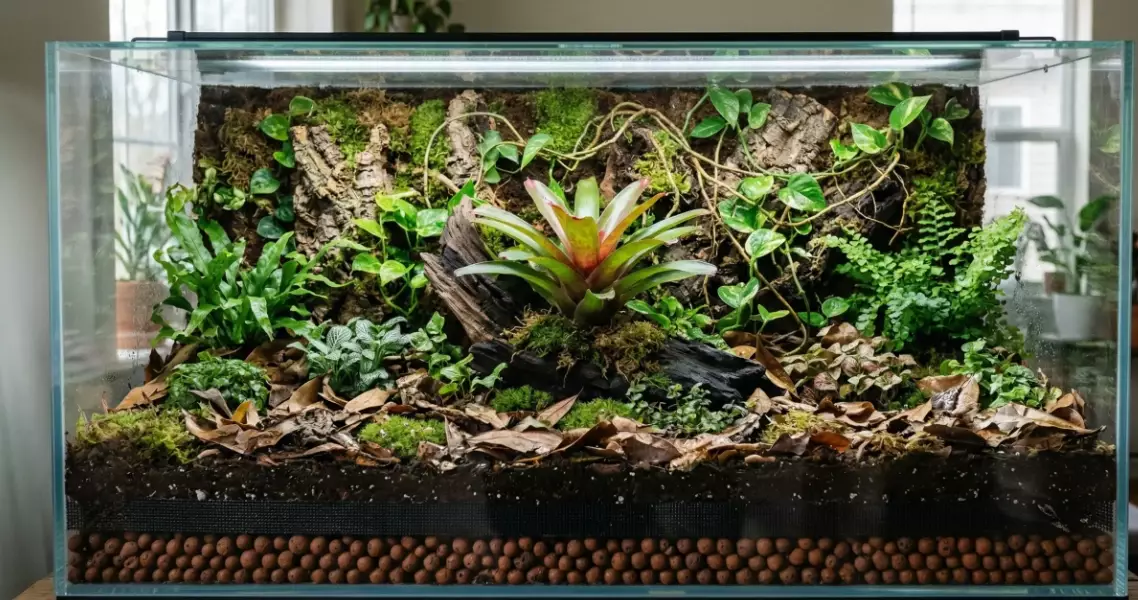
Do these minimum sizes apply to bioactive setups with deep substrate?
They apply to the usable space above the substrate, not the exterior glass. A 4x2x2 with 6 inches of substrate loses half a foot of height. For burrowing species like blue tongues, add that substrate depth on top of the chart number rather than subtracting it from the animal's space.
Is a glass tank worse than a wooden vivarium for hitting the chart size?
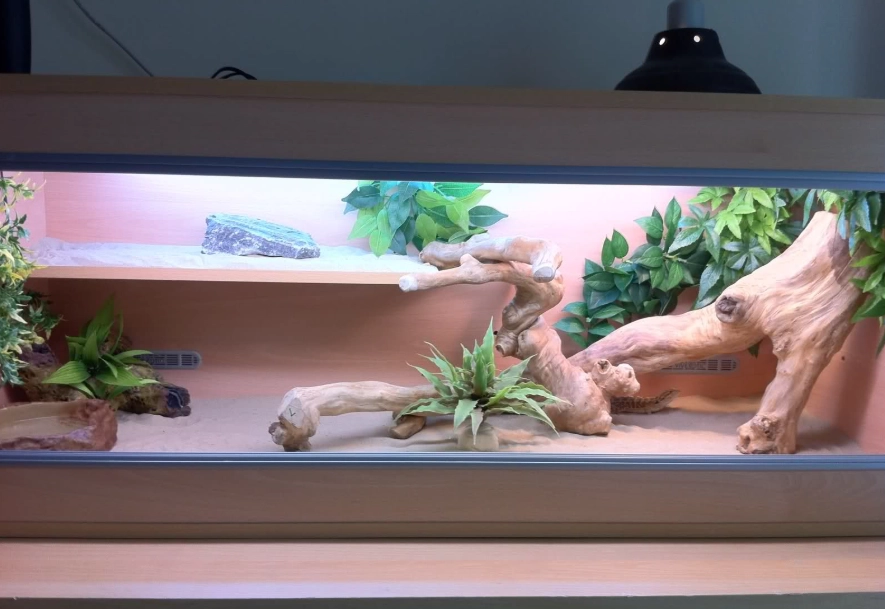
For humidity-sensitive species, yes — glass loses heat and humidity faster, so you end up fighting the enclosure. Wood holds both better and often comes in the exact 4x2x2 footprint. I switched most of my tropical setups to wooden vivs and stopped chasing humidity numbers every morning.
What if my adult reptile is smaller than the chart says?
Charts are species averages, and individuals vary. A 3.5-foot male corn snake doesn't need the full 4-foot tank, but the width and height minimums still hold. Don't shrink the footprint below the chart — shrink nothing. Use the extra floor for a larger water dish or a second hide.
Can I stack two smaller tanks instead of one big one?
Only if each tank independently meets the minimum for its occupant. Stacking doesn't combine space — your animal can't use the tank below. I've seen people justify a 3-foot tank by pointing at a second 3-foot tank underneath. That's two inadequate enclosures, not one adequate one.
Charts are a starting line, not a finish line. The keepers I know who have the healthiest animals didn't buy the biggest tank — they bought the right shape and filled it well. Article fact-checked against published care sheets and species size data.